How to Get More Customer Reviews and Use Them for Local SEO
More customer reviews come from a simple system: ask at the right moment, make the process easy, respond professionally, and reuse genuine feedback across your local search presence. Learning how to get more customer reviews and use them for local SEO means turning everyday customer satisfaction into proof that helps people find, trust, and choose your business. For African SMEs, reviews are especially powerful because many customers compare businesses on Google, maps, directories, social platforms, and AI search tools before calling, visiting, or sending a WhatsApp message.
Customer Reviews are public or private comments from customers that describe their experience with a business, product, or service.
Local SEO is the process of improving a business’s online presence so nearby customers can find it in local search results, maps, directories, and recommendation platforms.
Why Do Customer Reviews Matter for Local SEO?
Customer reviews affect local SEO because search platforms use reviews as trust, relevance, and engagement signals. Google states that reviews on a Google Business Profile can influence local search performance, while platforms like Facebook, Tripadvisor, Apple Maps, and industry directories also shape customer discovery.
Reviews help local search in four practical ways:
- Trust: A clinic in Accra with recent patient reviews looks safer than one with no public feedback.
- Relevance: Reviews that mention “dental cleaning,” “hotel near Victoria Island,” or “family restaurant in Nairobi” add natural service and location language.
- Conversion: Positive reviews reduce doubt before a customer calls, books, or visits.
- Freshness: Recent reviews show that the business is active and serving customers now.
A Moz local reviews resource notes that 51% of customers will always or usually leave a review if asked. That means many businesses do not lack happy customers. Many businesses lack a repeatable review request process.
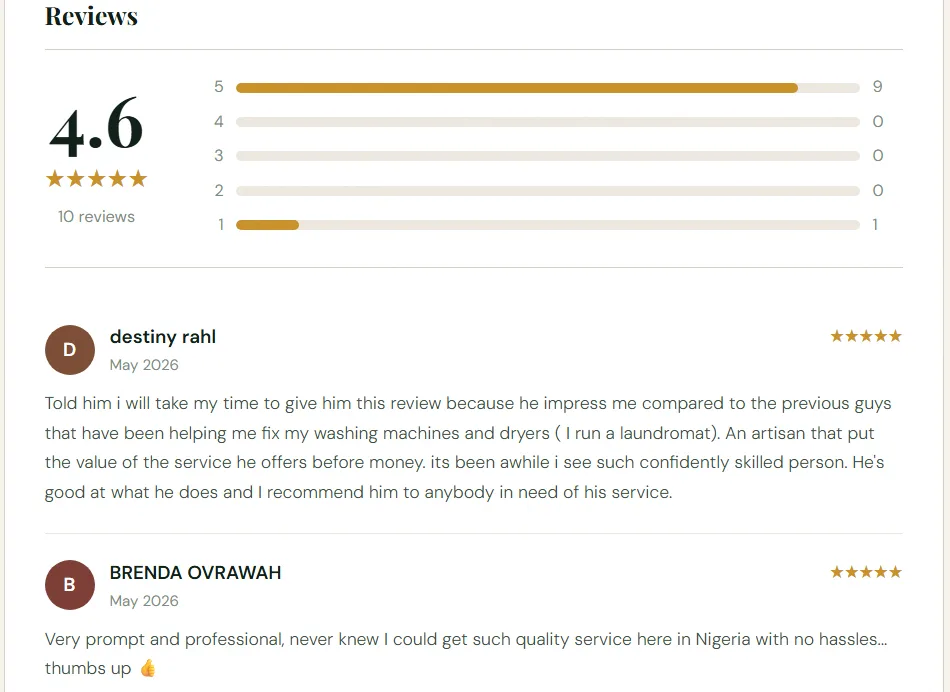
Step 1: Choose the Review Platforms That Matter Most
Start by choosing the platforms where your customers already make decisions. For most local businesses, Google Business Profile should be the first priority because Google reviews appear in Search and Maps. Hospitality businesses should also consider Tripadvisor. Restaurants, salons, gyms, and retail stores may benefit from Facebook recommendations. Professional services may need industry directories and first-party testimonials on their own websites.
The best local review strategy combines third-party reviews for visibility with first-party reviews for website trust and sales conversion.
Use this simple platform map:
| Business Type | Priority Review Platforms | Why the Platforms Matter |
|---|---|---|
| Hotels and tour companies | Google, Tripadvisor, Facebook | Travelers compare ratings before booking |
| Restaurants and cafés | Google, Maps, Facebook | Customers search by location, food type, and ratings |
| Clinics and wellness providers | Google, business directories, website reviews | Trust and professionalism influence appointments |
| Lawyers and consultants | Google, professional directories, website testimonials | Clients look for credibility before contacting |
| Home service providers | Google, Maps, local directories | Customers compare nearby providers quickly |
Your review platform mix should match customer behavior, not internal preference.
Step 2: Prepare Your Local Profiles Before Asking
A review request works better when the customer lands on a complete, professional profile. Before asking for reviews, confirm that your business name, address, phone number, website, hours, photos, services, and business category are accurate everywhere.
Your Google Business Profile is usually the starting point. A complete profile helps customers confirm that they are reviewing the right business. Strong profile details also help search engines understand what you offer and where you operate. The same principle applies to directories, maps, and local discovery platforms.
Accurate business data also supports citations, which are online mentions of your business name, address, and phone number. The most reliable local citation signals come from consistent information across trusted platforms.
Destinali helps African businesses improve this foundation through AI-powered business visibility across 54 African countries, with 1M+ verified businesses and 80+ categories that support local discovery beyond a single platform.
Step 3: Ask Customers at the Right Moment
The best time to ask for a review is immediately after a positive customer experience. A restaurant should ask after a happy meal. A clinic should ask after a smooth appointment. A hotel should ask at checkout or shortly after the guest leaves. A real estate agent should ask after a successful viewing, lease, or sale milestone.
Review requests work best when the customer still remembers the value you delivered.
Train staff to listen for satisfaction signals. Phrases like “thank you,” “this was helpful,” “I will come back,” or “I loved the service” are natural openings. The staff member can respond with a short, respectful request.
Example in-person script:
“Thank you. We are glad you had a good experience. Would you mind leaving us a quick Google review? Your feedback helps other customers find us.”
A Google reviews guide from CYBERsprout makes the same practical point: happy customers often need a reminder, not pressure.
Step 4: Make the Review Process Easy
Customers are more likely to leave reviews when the process takes less than one minute. Do not ask people to search for your business, find the right profile, and figure out where to click. Give them a direct review link, QR code, or short instruction.
To make review collection easier, use these assets:
- A direct Google review link.
- A QR code on receipts, menus, invoices, front-desk signs, and delivery cards.
- A WhatsApp message template for follow-ups.
- A short email request after service completion.
- A website button that says “Leave a Review.”
A direct review link removes friction and increases the chance that a satisfied customer will complete the review.
For Google Business Profile, business owners can usually access a review request link through the “Ask for reviews” or “Get more reviews” option. A strong Google Business Profile setup makes that review link easier to use because the customer sees correct business information.
Step 5: Use Clear Review Request Templates
A good review request is short, human, and specific. The request should explain why the review matters and make the action easy. The request should never demand a five-star rating or tell customers what to write.
Use templates like these:
WhatsApp Review Request Template
Hi [Name], thank you for choosing [Business Name]. We are glad we could help with [service]. Your feedback helps other customers in [city] find a trusted business. You can leave a quick review here: [review link].
Email Review Request Template
Subject: Thank you for choosing [Business Name]
Hi [Name], Thank you for visiting us today. We hope you had a good experience with [service or product]. A short review would help other customers in [city] understand what to expect from our business. Leave your review here: [review link]. Thank you for your time.
In-Person Review Request Script
“We appreciate your visit today. If you were happy with the service, a quick review would help other local customers find us.”
Review requests should feel like a customer service moment, not a marketing campaign.
Step 6: Follow Review Rules and Avoid Risky Tactics
Review growth should be ethical, steady, and compliant with platform rules. Do not buy fake reviews. Do not ask only happy customers for reviews while blocking unhappy customers. Do not offer rewards only for positive reviews. Do not write reviews on behalf of customers.
Google’s review policies prohibit fake engagement and conflicts of interest. Many countries also treat misleading reviews as a consumer protection issue. A business that manipulates reviews may lose customer trust, face profile penalties, or damage its reputation.
The safest rule is simple: ask real customers for honest feedback and make the process easy for everyone.
A Google review explainer from Ray Pastoors also highlights the importance of avoiding coercion when helping less tech-savvy customers leave reviews. Staff can help customers find the review page, but staff should never pressure the customer or dictate the rating.
Step 7: Respond to Every Review Professionally
Responding to reviews shows customers and search platforms that your business is active and attentive. A positive review deserves a specific thank-you. A negative review deserves a calm, professional response that acknowledges the issue and invites resolution.
Review responses are public trust signals because future customers judge both the review and the business’s reply.
Use this response framework:
- Thank the customer: Start with appreciation.
- Reference the experience: Mention the service, product, or location where appropriate.
- Stay professional: Avoid blame, arguments, or emotional language.
- Move sensitive issues offline: Share a phone number, email, or support channel.
- Show improvement: Mention corrective action when appropriate.
Example negative review response:
Thank you for your feedback, Amina. We are sorry your delivery experience did not meet expectations. Please contact our team on [phone/email] with your order number so we can review the issue and help resolve it.
Good responses can reduce the damage of poor reviews and increase trust with future customers.
Step 8: Use Reviews Across Your Local SEO Assets
Reviews should not sit only on Google or a directory profile. Strong reviews can support your website, service pages, landing pages, social posts, proposals, and local business listings. Always use genuine customer wording and avoid editing reviews in a way that changes the meaning.
Use reviews in these places:
- Homepage trust sections.
- Service pages for specific offerings.
- Location pages for cities or branches.
- Social media posts.
- WhatsApp catalog descriptions.
- Business directory profiles.
- Sales decks and proposals.
First-party reviews can also add fresh, customer-written language to your website. According to GatherUp’s review and local SEO discussion, reviews on owned platforms can support trust, engagement, and keyword-rich content.
Strong on-page local SEO connects customer proof with clear service, location, and contact information.
Step 9: Turn Review Insights Into Better Search Visibility
Reviews often reveal what customers value most. A hotel may notice repeated mentions of “clean rooms” and “close to the airport.” A salon may see praise for “natural hair care” or “bridal makeup.” A lawyer may receive reviews that mention “clear communication” and “property documents.”
Those phrases can improve your local SEO strategy because customers are describing your business in search-friendly language.
Use review insights to improve:
- Service page copy.
- Google Business Profile services.
- FAQ answers.
- Blog topics.
- Business descriptions.
- Staff training.
- Product or service improvements.
The best review strategy improves both visibility and operations. Customer language tells you what to promote, what to fix, and what customers compare before choosing a business.
Step 10: Build a Monthly Review Routine
Review collection should be a monthly habit, not a one-time campaign. Search platforms and customers both value recent feedback. A business with 20 reviews from last month may look more active than a business with 100 reviews from five years ago.
Create a simple monthly review routine:
- Ask every satisfied customer within 24 hours.
- Send one polite reminder after three to seven days.
- Respond to all new reviews weekly.
- Record common praise and complaints.
- Add strong reviews to your website or profile.
- Check that business listings stay consistent.
Consistent review collection creates a steady reputation signal that supports long-term local SEO.
Businesses that want stronger discovery across maps, search, directories, and AI results should also maintain accurate citations. Strong local citation building helps search platforms verify business information across the web.
How Do Reviews Support AI Search and Local Discovery?
AI search tools increasingly summarize businesses based on structured information, public reviews, website content, and third-party mentions. When someone asks for “best family hotel in Kigali” or “trusted dentist in Lagos,” AI systems may use review language, business categories, location data, and online credibility signals to form recommendations.
Customer reviews help AI-driven discovery by adding real-world proof to your business profile. Reviews describe what your business does, where it operates, and why customers trust it.
Local SEO is no longer limited to ranking on one search results page. Businesses now need consistent information across Google, maps, directories, websites, review platforms, and AI-powered search experiences. A strong local SEO system connects those signals so customers can discover the business wherever they search.
FAQ
Do Reviews Help Local SEO?
Yes, reviews help local SEO by improving trust, relevance, and engagement signals for a business. Google Business Profile reviews can influence local visibility, especially when reviews are recent, genuine, and connected to a complete business profile. Reviews also help customers choose between similar businesses in the same city or category.
How Many Reviews Does a Local Business Need?
A local business needs enough reviews to look credible compared with nearby competitors. A restaurant in Lagos competing with businesses that have 300 reviews may need a higher review volume than a specialist consultant in Kigali competing with firms that have 20 reviews. Review quality, recency, rating, and response activity matter alongside the total number.
What Is the Best Way to Ask Customers for Reviews?
The best way to ask customers for reviews is to request feedback soon after a positive experience and provide a direct review link. Email, WhatsApp, SMS, QR codes, receipts, and in-person requests can all work when the message is short and respectful. The request should ask for honest feedback, not a guaranteed positive rating.
Can I Offer Customers a Discount for Leaving a Review?
Offering a discount for a review can create compliance and trust problems, especially when the reward influences the rating or review content. A safer approach is to ask all customers for honest feedback without tying the request to a positive review. Platform policies, including Google’s review rules, discourage fake, biased, or manipulated reviews.
How Should I Respond to Negative Reviews?
Respond to negative reviews calmly, thank the customer, acknowledge the issue, and invite the customer to continue the conversation privately. A professional response can reassure future customers that the business takes complaints seriously. Avoid arguments, insults, or public blame because those replies can damage trust more than the original review.
What Is the 80/20 Rule for SEO?
The 80/20 rule for SEO means focusing on the few actions that create most of the results. For local SEO, the highest-impact actions often include optimizing Google Business Profile, earning regular customer reviews, keeping citations consistent, and improving key service pages. Reviews are one of those high-impact actions because they affect both visibility and customer trust.
Is SEO Dead or Evolving in 2026?
SEO is evolving in 2026, not dying. Customers still use search engines, maps, directories, and now AI tools to find local businesses. The strongest local SEO strategies combine traditional search optimization with structured business data, trustworthy reviews, accurate listings, and content that answers customer questions clearly.
Next Steps
- Choose the two or three review platforms that matter most for your business.
- Make sure your Google Business Profile and local listings are complete and accurate.
- Create one direct review link and one QR code.
- Train staff to ask satisfied customers at the right moment.
- Send short WhatsApp, SMS, or email requests within 24 hours.
- Respond to every review each week.
- Use customer review language on your website, listings, and service pages.
Customer reviews work best when review collection becomes part of normal business operations. A steady flow of honest feedback helps customers trust your business, helps search platforms understand your value, and helps AI-powered discovery systems describe your business more accurately.
African businesses that want stronger visibility across search, maps, directories, and AI discovery can get a local SEO pack from Destinali to build more trust and attract more qualified customers.

Destinali helps local businesses improve online visibility, discoverability, and customer acquisition across search engines, AI systems, maps, and local search platforms.
List your business →