Local SEO for Hotels and Hospitality Businesses in Africa: A Step-by-Step Guide
African travelers are searching differently now. A guest in Nairobi types "boutique hotel near Westlands" into Google. Another in Lagos asks ChatGPT to recommend a business hotel in Victoria Island. A tourist planning a Kigali trip asks Perplexity for the best-rated guesthouses with airport transfers. If your property does not appear in those answers, you lose the booking – often before you even knew someone was looking.
Local SEO for hotels and hospitality businesses in Africa is the process of making your property discoverable across search engines, maps, AI tools, and local directories when guests search for accommodation in your area. The steps below are practical, affordable, and sequenced for results.
Step 1: Claim and Complete Your Google Business Profile
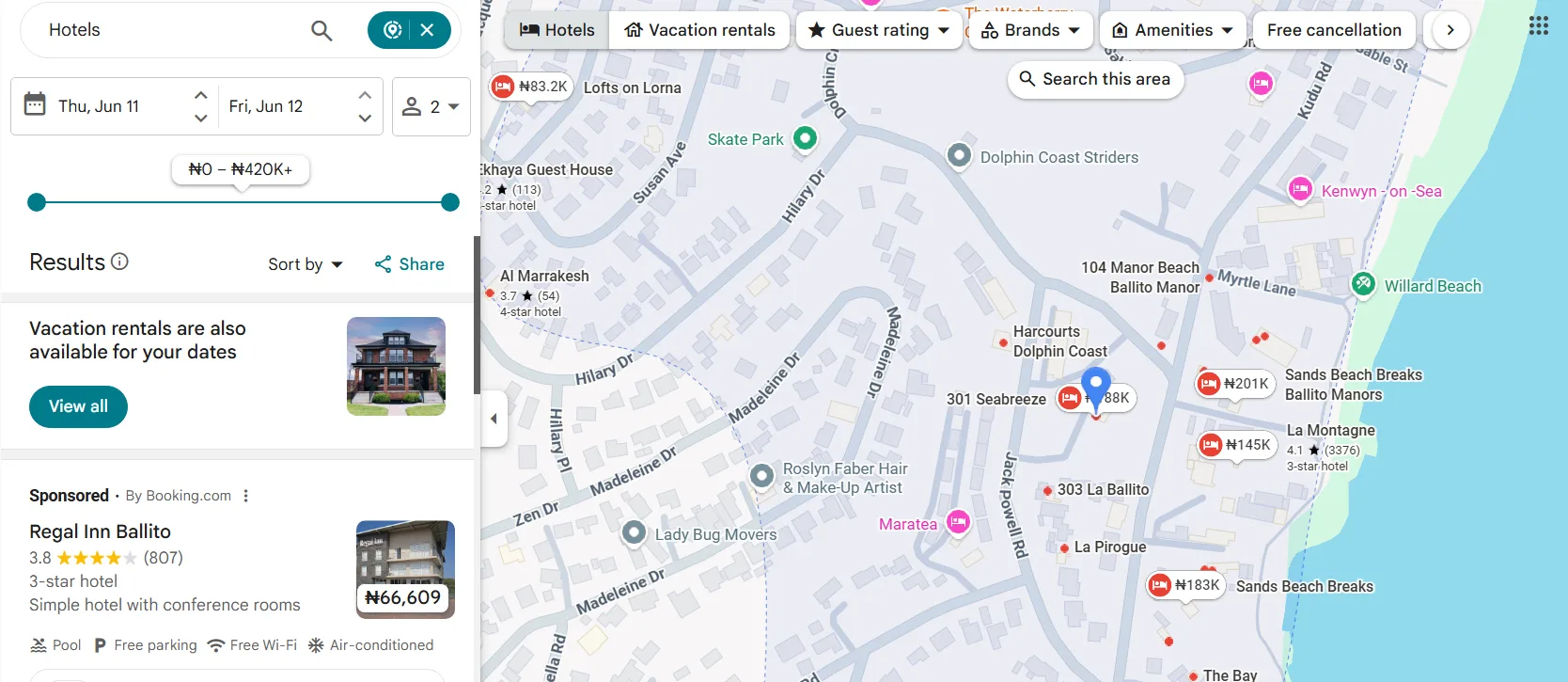
Your Google Business Profile (GBP) is your most powerful free visibility tool. When someone searches "hotels in Accra" or "guesthouses near Sandton," Google's local results pull directly from GBP data.
Visit business.google.com to claim or create your listing. Once inside, complete every field.
What to Fill In
- Business name: Use your exact trading name. No keyword stuffing.
- Category: Select "Hotel" as your primary category. Add secondary categories like "Boutique Hotel," "Serviced Apartment," or "Lodge" where accurate.
- Address: Match it exactly to what appears on your website and every other directory.
- Phone number: Use a local number with country code. Be consistent everywhere.
- Amenities: Check every applicable feature – Wi-Fi, parking, restaurant, pool, conference rooms, 24-hour front desk.
- Description: Write 200–300 words. Include your city, neighborhood, and the type of guest you serve.
Upload at least ten photos across your rooms, lobby, restaurant, outdoor spaces, and local views. Profiles with photos receive significantly more direction requests than those without.
Step 2: Target Keywords African Guests Actually Use
Generic terms like "luxury hotel" are impossible to compete on. Your guests search with specificity – location, occasion, and need.
How to Find the Right Keywords
Open Google and type your property type followed by your city. Watch the autocomplete suggestions. Those are real searches. Examples:
- "hotels in Lekki with pool"
- "budget guesthouses Kampala city centre"
- "romantic lodge near Nairobi"
- "conference hotel Dar es Salaam"
Build a short list of ten to fifteen keyword phrases. Use free tools like Google Keyword Planner or the free local SEO tools available to small businesses in Africa to check monthly search volume.
Where to Place Keywords
Work your keywords into:
- Your GBP business description
- Your website's H1 title and meta description
- Room and package page headings
- Image alt text
- Your URL slugs where possible
Write for guests first. If a sentence sounds awkward with the keyword in it, rewrite the sentence.
Step 3: Build Consistent NAP Citations Across African Directories
NAP stands for Name, Address, and Phone number. Search engines confirm your business is legitimate by matching your NAP data across multiple sources. Inconsistencies – a different address format here, a missing suite number there – weaken your local ranking signals.
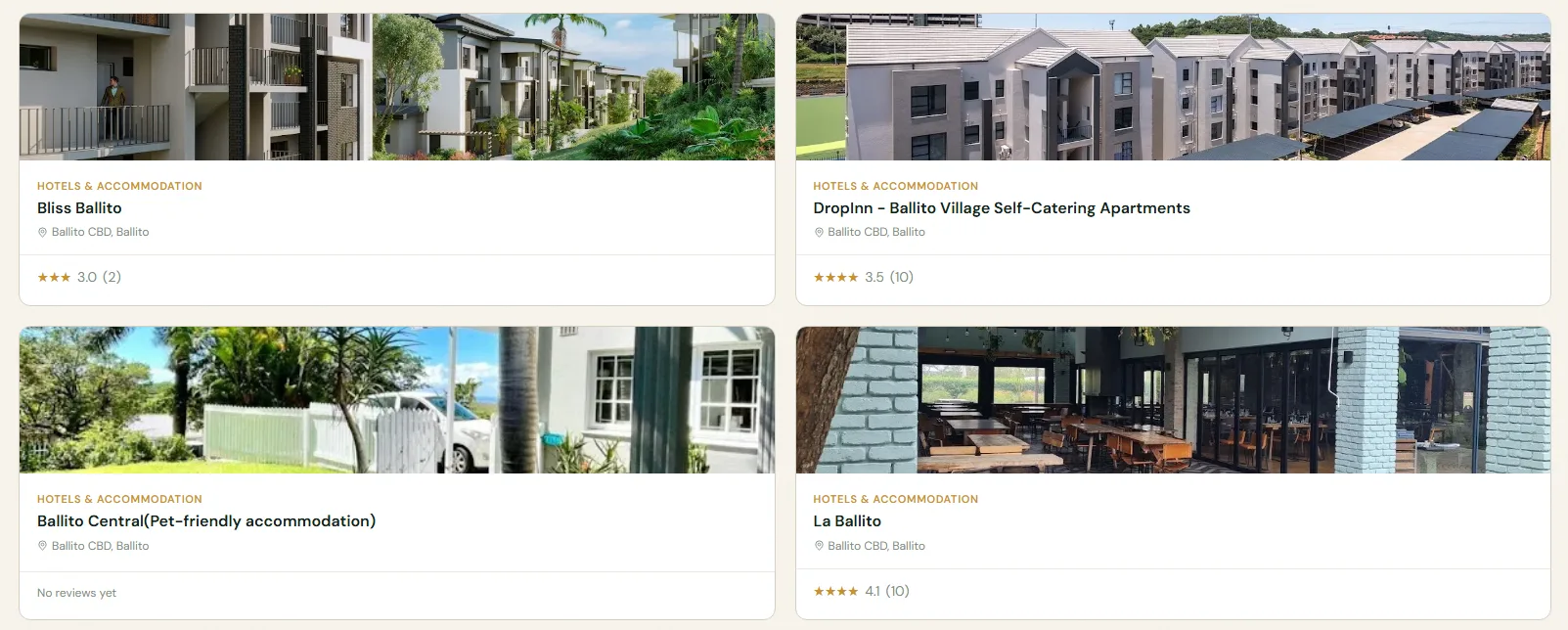
List your property on the key platforms that African travelers and search engines trust. The most impactful local business directories in Africa include TripAdvisor, Hotels.ng (for Nigeria), Jumia Travel, and country-specific platforms. List on each one using your exact address format – never abbreviate differently across platforms.
Destinali covers 54 African countries and 80+ categories, giving hospitality businesses a structured listing that search engines and AI tools can read and trust. Adding your property there puts your NAP data in a format built for modern discovery.
After listing, run a quick audit. Search your business name and check the top five results. If your address or phone appears differently anywhere, correct it.
Step 4: Generate and Manage Guest Reviews
Reviews are ranking signals and booking triggers at the same time. Most travelers check reviews before booking and for African properties competing against international OTAs, strong local reviews build the trust that converts searchers into guests.
How to Ask for Reviews Consistently
Ask at three moments:
- At check-out: "A quick Google review really helps us. Here's the link."
- Via WhatsApp follow-up: Send a short message two days after departure with a direct link to your Google review page.
- Via email: Include a review link in your post-stay email.
How to Respond to Every Review
- Positive: Thank the guest, mention something specific they praised, and use your property name and city naturally in the response.
- Negative: Apologize directly, state what has changed, and invite private contact to resolve the issue. Do not argue.
Consistent responses signal active management to Google and reassure prospective guests.
Step 5: Optimize Your Website for Local Search
Your GBP gets guests to the door. Your website closes the booking. Both need to work together.
Technical Basics That Cannot Be Skipped
- Mobile speed: Most searches in Africa happen on mobile. Test your site at PageSpeed Insights. Aim for a load time under three seconds.
- HTTPS: A secure site is a ranking factor and a trust signal.
- Clear booking path: A guest who lands on your site should reach a booking form or WhatsApp contact in two clicks or fewer.
On-Page Optimization
Each key page – your homepage, room pages, and location page – needs:
- A unique H1 heading with your city and property type
- A meta title under 60 characters that includes your primary keyword
- A meta description under 160 characters that gives a reason to click
- At least one paragraph of locally relevant content per page
Create a dedicated location page if you serve multiple areas or if guests often travel from a specific city. A page titled "Luxury Hotel in Abuja for Business Travelers" performs far better than a generic "Rooms" page.
Step 6: Add Schema Markup to Your Website
Schema markup is structured data that tells search engines and AI tools – exactly what your business is, where it is, and what it offers. For hotels, this means your name, address, phone, star rating, price range, and amenities can be read by machines, not just humans.
This matters more than ever. AI search platforms like Google AI Overviews, ChatGPT, and Perplexity pull from structured data to populate their answers. A hotel without schema is harder to cite.
You do not need a developer to add schema. The free schema generator from AuthorityStack.ai generates ready-to-paste JSON-LD code for local businesses – no technical skill required. Generate your schema, paste it into the <head> of your website, and validate it with Google's Rich Results Test.
Step 7: Publish Local Content That Earns Rankings
Content is what separates hotels that rank from hotels that stay invisible. Publishing useful, locally focused articles builds your authority on topics guests are searching for and gives search engines more reasons to surface your property.
Content Ideas That Work for African Hotels
- "What to Do in [Your City] This Weekend" – updated seasonally
- "Best Restaurants Near [Your Property Name] in [City]"
- "A Guide to [Local Landmark] for First-Time Visitors"
- "Corporate Travel in [City]: What Business Guests Need to Know"
Each piece should mention your property naturally and link back to your rooms or contact page. Content that answers real guest questions – not just promotional copy – is what earns trust from both readers and algorithms. Structuring that content around local city search intent is what turns useful articles into ranking pages.
For properties that want this done professionally, Destinali's Local SEO and AI Visibility Service publishes three authoritative content pieces – a listicle, a comparison post, and a review article – each linking back to your business profile with do-follow backlinks.
FAQ
What Is Local SEO for Hotels in Africa?
Local SEO for hotels in Africa is the practice of optimizing a hotel's online presence so it appears when travelers search for accommodation in a specific location. This includes Google Business Profile optimization, consistent directory listings, keyword-targeted website content, guest reviews, and structured data. The goal is to win direct bookings by ranking ahead of OTAs and competitors in local search results.
How Do I Get My Hotel to Appear on Google Maps?
Claim and complete your Google Business Profile at business.google.com. Add your exact address, phone number, business category, photos, and a full description. Once verified, your property becomes eligible to appear in Google Maps results and the local pack – the map-based results shown at the top of location searches.
Which Online Directories Should African Hotels List On?
Prioritize Google Business Profile first, then TripAdvisor, Booking.com, and country-specific platforms like Hotels.ng (Nigeria), Jumia Travel, and local hospitality directories. Consistent NAP data across all platforms strengthens local search rankings. Business listing platforms built for African markets add additional structured visibility for regional searches.
How Many Reviews Does a Hotel Need to Rank Locally?
There is no fixed number, but properties with more than twenty recent reviews consistently outperform those with fewer in local pack rankings. Recency matters as much as volume – a steady flow of new reviews signals an active, relevant business. Aim for at least two to three new reviews per month.
Does Schema Markup Really Help Hotel Websites Rank?
Yes. Schema markup helps search engines and AI tools accurately read your hotel's name, location, price range, star rating, and amenities. Hotels with proper structured data are more likely to appear in rich results and AI-generated travel recommendations. Adding Hotel or LocalBusiness schema is one of the highest-impact technical improvements a hotel website can make.
Why Are OTAs Outranking My Hotel Website?
OTAs outrank most hotel websites because they have massive domain authority, thousands of backlinks, and optimized content at scale. The way to compete is not to beat them at their own game but to own your local territory – a strong Google Business Profile, consistent citations, high-quality reviews, and location-specific content give your direct website advantages that OTAs cannot replicate at the property level.
How Long Does Local SEO Take to Show Results?
Initial improvements – especially from GBP optimization and citation fixes – can improve visibility within two to four weeks. Sustained ranking gains from content and review-building take three to six months of consistent effort. Local SEO compounds over time: businesses that start early build advantages that become very difficult for competitors to close.
What to Do Now
- Claim and complete your Google Business Profile today – this is the fastest visibility win available.
- Audit your NAP data across your top five directory listings and fix any inconsistencies.
- Add schema markup to your website using a free tool and validate it immediately.
- Ask your last ten guests for a Google review via WhatsApp.
- Publish one locally focused article this week targeting a question your guests actually ask.
African hospitality is extraordinary. The problem is rarely the property – it is visibility. Get your business in front of the guests who are already searching, and create a free listing on Destinali to start building your discoverable presence across Africa today.

Destinali helps local businesses improve online visibility, discoverability, and customer acquisition across search engines, AI systems, maps, and local search platforms.
List your business →