10 Best Lead Sources for Local Businesses
Paid ads get attention, but they stop the moment the budget runs out. Word of mouth scales slowly. For local businesses across Africa and beyond, the challenge is not finding a lead source – it is identifying which ones consistently deliver qualified prospects at a cost that makes sense.
This list covers the ten lead sources that work for local businesses: service providers, restaurants, clinics, salons, hotels, real estate agencies, and professional firms. Each entry is evaluated on cost, reliability, and fit for businesses serving a defined geographic area.
1. Local SEO and Organic Search Visibility
Local search engine optimization (Local SEO) puts your business in front of people actively searching for what you offer. When someone types "dentist in Nairobi" or "best restaurant in Accra," the businesses that appear are not there by accident – they have consistent business information across directories, location-relevant content on their websites, and strong signals telling search engines they serve that area.
For African businesses, common ranking mistakes include inconsistent addresses, missing category data, and no local content. Fixing these issues directly improves lead flow without any advertising spend.
What drives results:
- Consistent Name, Address, Phone (NAP) data across all platforms
- Location-specific pages and service descriptions
- Verified business listings on Google, Bing Maps, and local directories
- Regular customer reviews signaling trust and activity
2. Business Listings and Online Directories
A verified listing on a trusted directory is one of the most reliable passive lead sources available to local businesses. Directories aggregate customer intent – people browsing them are already looking for a specific type of business in a specific place.
Listing your business on top online directories for African businesses builds local citation data that helps search engines match your business across platforms. The more consistent and complete your listings, the more visible your business becomes in both traditional and AI-powered search.
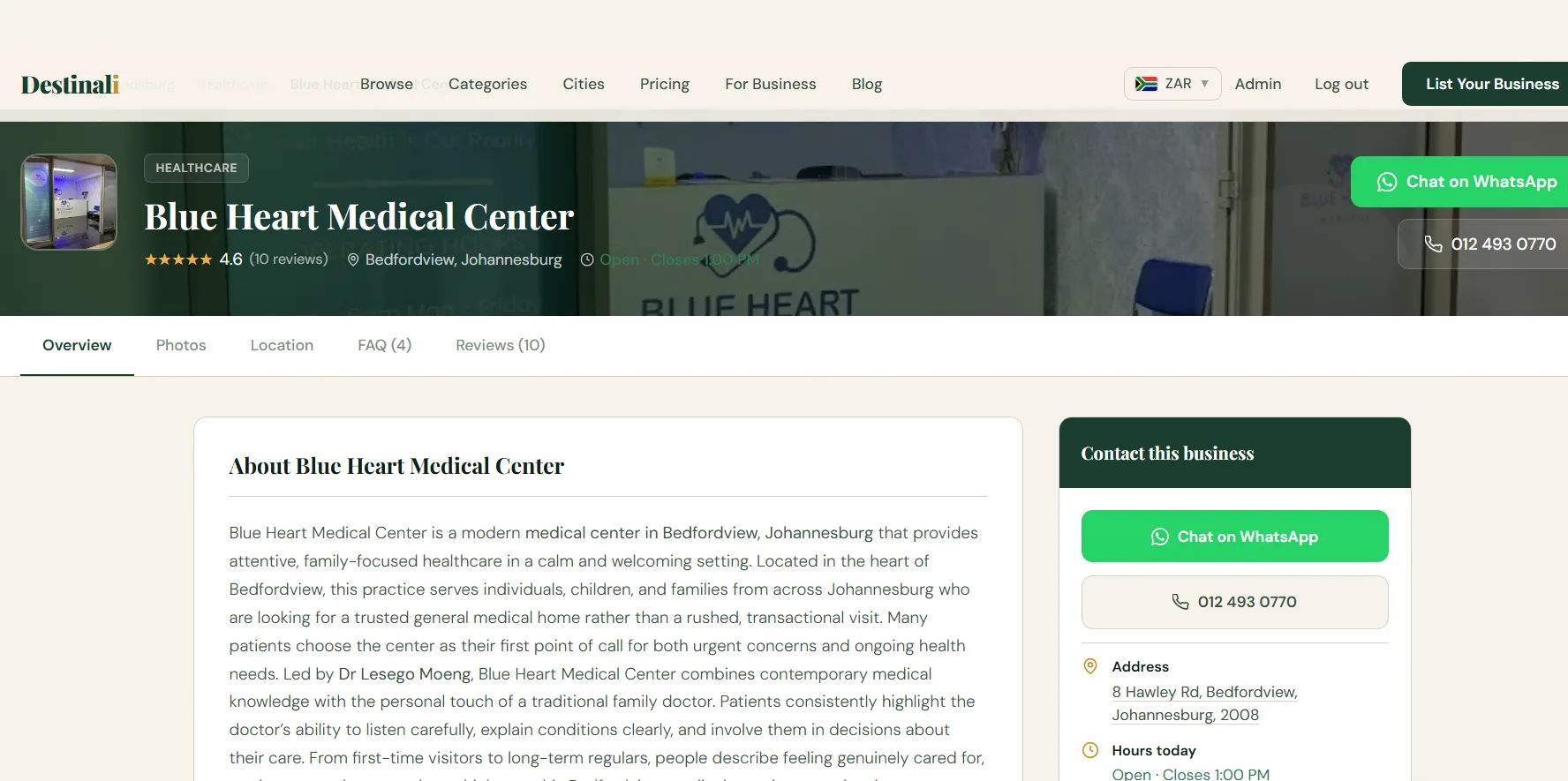
Destinali lists over 1 million verified businesses across 54 African countries and 80+ categories, giving local businesses structured visibility across the region. A free listing takes minutes to set up and creates a persistent, discoverable presence that works around the clock.
What drives results:
- Complete business profiles with photos, hours, and service descriptions
- Listings on both general and niche-specific directories
- Category accuracy so the right customers find you
- Regular profile updates to maintain freshness signals
3. Customer Referrals and Word-of-Mouth
Referrals are the highest-converting lead source for most local businesses. A customer who arrives via a personal recommendation already trusts you before the first conversation. Conversion rates for referred leads are typically two to three times higher than leads from paid channels.
The mistake most businesses make is treating referrals as something that happens on its own. Structured referral programs – a discount for the referring customer, a welcome offer for the new one – turn passive word-of-mouth into a repeatable system.
What drives results:
- Asking satisfied customers directly for referrals
- Creating a simple referral incentive (discount, credit, free service)
- Following up promptly when a referral is made
- Tracking which customers refer most often so you can nurture those relationships
4. Google Business Profile
Google Business Profile (GBP) is the single most impactful free tool for local lead generation. A well-optimized GBP listing appears in Google Maps results, local pack listings, and Google Search – often above organic website results. Businesses with complete, active profiles receive significantly more calls, direction requests, and website visits than those with incomplete listings.
For service businesses, clinics, hotels, and restaurants, GBP is often the first point of contact a customer has with the business. The profile must be accurate, complete, and actively maintained with photos and reviews.
What drives results:
- Fully completed profile including categories, services, and business hours
- Regular photo uploads showing the business, products, or team
- Responding to every review – positive and negative
- Using the Q&A and posts features to signal activity
5. Social Media and Community Groups
Social media generates leads differently depending on the platform and the business type. Facebook Groups and WhatsApp communities are particularly effective for local businesses in African markets, where community-based recommendations drive significant purchasing decisions.
Restaurants, salons, and service providers that engage consistently in local Facebook groups or neighborhood WhatsApp communities build name recognition that translates directly to bookings and inquiries. The key is genuine participation – answering questions, sharing useful content – rather than promotional posting.
What drives results:
- Active presence in local Facebook groups and WhatsApp communities
- Content that demonstrates expertise (tips, behind-the-scenes, results)
- Direct messaging responsiveness – slow replies lose leads
- Instagram and TikTok for visual businesses like salons, restaurants, and hospitality
6. Content Marketing and Blogging
Publishing useful, location-relevant content attracts customers at the research stage – before they have decided which business to use. A hotel that publishes a guide to visiting their city, or a clinic that answers common health questions for their community, builds trust and captures search traffic that competitors without content cannot access.
Content marketing compounds over time. An article published today can generate leads for years without additional investment. For businesses in competitive categories, content is often what separates those who rank from those who don't.
What drives results:
- Articles targeting location-specific search queries
- Content that answers real customer questions before they ask
- Internal links connecting service pages to informational content
- SEO-optimized posts that align with what local customers actually search
7. Local Networking and Business Partnerships
Local partnerships create a referral network beyond individual customers. A real estate agency that partners with a moving company, or a salon that cross-promotes with a nearby spa, expands reach into an audience that has already been warmed up by a trusted local brand.
Participating in chamber of commerce events, business associations, and community sponsorships builds the kind of visibility that does not show up in analytics but consistently produces lead generation results for businesses that invest in it. Community involvement also builds backlinks and citation mentions that strengthen local search authority.
What drives results:
- Formal referral agreements with complementary businesses
- Sponsoring local events or community initiatives
- Joining industry associations and attending meetings consistently
- Cross-promotions that give both businesses exposure to new audiences
8. Paid Local Advertising (PPC and Social Ads)
Paid advertising delivers immediate visibility for local businesses that need leads quickly. Google Ads targeting location-specific keywords can place a business at the top of search results the same day the campaign launches. Facebook and Instagram ads allow hyper-local targeting by neighborhood, radius, or city.
The limitation is cost: paid leads stop the moment spending stops. For most local businesses, paid ads work best as a short-term accelerator – used to generate momentum while organic channels build – rather than a permanent primary source.
What drives results:
- Geo-targeted campaigns limited to the business's actual service area
- Ad copy that speaks to local specifics (city name, neighborhood, local reference points)
- Landing pages optimized for conversion, not just traffic
- Retargeting campaigns to re-engage visitors who did not convert the first time
9. Online Reviews and Reputation Signals
Reviews are both a trust signal and a lead source. High-rated businesses with recent, detailed reviews consistently outperform lower-rated competitors in local search rankings and customer choice. On platforms like Google, TripAdvisor, and local directories, a four-plus star rating with a hundred reviews is a credible, passive lead generation asset.
For hospitality businesses, the review profile is often decisive. A hotel or restaurant with strong reviews on Google and relevant directories receives organic inquiries that require no advertising spend. Building a systematic review request process – asking every satisfied customer, on every channel – is one of the highest-return activities a local business can do.
What drives results:
- Systematically requesting reviews after each positive customer interaction
- Responding to all reviews within 24 hours
- Addressing negative reviews professionally and publicly
- Monitoring review platforms relevant to the business category
10. AI Search Visibility and Structured Data
AI-powered search tools – including Google AI Overviews, ChatGPT, Perplexity, and Gemini – are increasingly used by consumers to find local businesses and services. When someone asks an AI tool "which is the best accounting firm in Lagos" or "top hotels in Kigali," the businesses that appear are those with well-structured, accurate data that AI systems can read and trust.
Structured data (schema markup) tells search engines and AI systems exactly what a business does, where it operates, and what customers say about it. Businesses without this data are invisible to AI-driven recommendations. The free schema generator at AuthorityStack.ai generates JSON-LD schema for local businesses with no technical skill required – making AI-readiness accessible to any SMB.
What drives results:
- LocalBusiness schema markup on the business website
- Consistent structured data across all platforms
- AI-optimized content that directly answers questions customers ask
- Visibility tracking to monitor when and how AI tools cite the business
Frequently Asked Questions
What Is the Most Effective Lead Source for Local Businesses?
Customer referrals and local SEO consistently deliver the highest-quality leads for local businesses. Referrals convert at two to three times the rate of paid leads because trust is already established. Local SEO generates leads passively over time without per-lead costs, making it the most cost-efficient channel for businesses serving a defined geographic area.
How Do Local Businesses Generate Leads Without Paid Advertising?
Local businesses can generate leads without paid advertising by optimizing their Google Business Profile, building consistent listings on local and niche directories, encouraging customer reviews, publishing location-relevant content, and engaging in local community networks and partnerships. These channels require time rather than ad spend and tend to produce more durable results over the long term.
Why Are Online Reviews Considered a Lead Source?
Online reviews function as a lead source because a high review rating increases both search ranking and consumer trust. Businesses with four-plus star ratings and recent reviews receive more clicks, calls, and direction requests than lower-rated competitors. On platforms like Google Maps and local directories, the review profile is often the primary factor a prospective customer uses to choose one business over another.
How Does AI Search Affect Local Business Lead Generation?
AI-powered tools like Google AI Overviews, ChatGPT, and Perplexity now answer local business queries directly, without showing a traditional list of results. Businesses with structured data, consistent directory listings, and clear content are more likely to be cited in these AI responses. Businesses without this data are effectively invisible to a growing segment of customers who use AI as their first search tool.
What Is Local SEO and Why Does It Matter for Lead Generation?
Local SEO is the practice of optimizing a business's online presence so it appears prominently in location-based searches. It includes maintaining accurate business listings, using location-specific keywords, earning customer reviews, and building citations across directories. For local businesses, Local SEO is one of the most cost-effective lead sources because it captures high-intent searchers – people who are actively looking for a business like theirs in their area.
How Quickly Can a Local Business Expect Results From These Lead Sources?
Paid advertising and directory listings can deliver leads within days of activation. Google Business Profile results typically improve within two to four weeks of optimization. Local SEO, content marketing, and referral programs build momentum over three to six months and tend to produce compounding results over time. A balanced approach uses faster channels for immediate leads while building slower channels for long-term, lower-cost lead generation.
The Bottom Line
- Local SEO and Google Business Profile are the highest-return lead sources for most local businesses – both free and compounding over time
- Directory listings, customer reviews, and structured data create passive visibility that generates leads without active effort
- Referral programs and local partnerships produce the highest-converting leads because trust transfers from the referrer
- Paid ads work for short-term acceleration but should not be the primary long-term source
- AI-powered search is a growing lead channel – businesses with structured, accurate data will be cited; those without it will not
- The strongest lead generation strategies combine two or three complementary channels rather than depending on one
African businesses ready to improve their discoverability can create a free listing on Destinali and start building the structured visibility that turns searches into customers.

Destinali helps local businesses improve online visibility, discoverability, and customer acquisition across search engines, AI systems, maps, and local search platforms.
List your business →